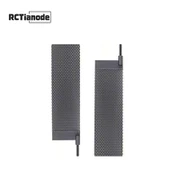
How to Choose a Good Titanium Anode Supplier?
Oct 17, 2026
The Coating Is Where Suppliers Hide
The titanium substrate is relatively standardized-Grade 1 or Grade 2 per ASTM B348, with minimum 99.2% titanium content. The substrate rarely fails first.
The coating is the product. And coating specifications are where the gap between genuine manufacturers and resellers becomes invisible on a quote sheet.
Red Flags When Evaluating Suppliers
They quote without asking about your process. A supplier who doesn't ask for electrolyte chemistry, current density, and temperature is not engineering your anode. They're selling you a metal plate with a coating.
No coating lab in-house. Titanium cutting and welding are easy to outsource. Coating formulation and sintering are the technical core. Ask directly: "Do you formulate and apply the coating yourself, or do you buy coated substrate?"
Vague service life claims. "10 years" without stated operating conditions is a marketing statement, not an engineering one. Life depends on current density, temperature, and electrolyte. A reputable supplier will give you a formula or a derating curve, not a number.
Why Richeng Exists in This Market
We've watched the titanium anode export market evolve for 15 years. The barriers to entry are low-anyone can buy titanium mesh, send it to a coating shop, and call themselves a manufacturer. The barriers to consistency are high.
Our approach is simple: we treat every inquiry as an engineering problem, not a quote request. We ask the questions most buyers don't know to answer. We document what we do. And we stand behind the numbers we put in writing.
If you're sourcing titanium anodes and want a supplier who will tell you when your specification is wrong before you waste money, we're here. Send us your operating conditions-not just a drawing-and we'll show you what a real engineering response looks like.