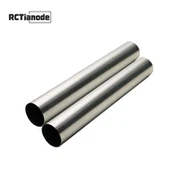
Titanium anode for sewage treatment
Oct 24, 2023
Wastewater treatment is an essential process for ensuring the protection of the environment and human health. A crucial component of this process is the use of electrodes to facilitate electrochemical reactions, which are used to remove pollutants from wastewater. One such electrode is the titanium (Ti) anode, which has gained widespread popularity due to its unique properties.
The use of Ti anodes in wastewater treatment processes has several advantages over conventional electrodes. Firstly, Ti anodes are highly resistant to corrosion by harsh chemicals and environments, making them ideal for use in aggressive wastewater treatment processes. Secondly, Ti anodes are extremely durable and can last for decades, providing an excellent return on investment. Thirdly, Ti anodes are highly conductive and efficient at facilitating the electrochemical reactions necessary for effective wastewater treatment.
Furthermore, Ti anodes have several unique properties that make them ideal for use in wastewater treatment processes. For example, Ti anodes have a high oxygen evolution potential, which facilitates the production of hydroxyl radicals that can oxidize organic pollutants. Additionally, Ti anodes have a high surface area-to-volume ratio, which provides a large surface area for electrochemical reactions to occur and enhances the overall efficiency of the wastewater treatment process.
Ti anodes can be used in a variety of wastewater treatment processes, including electrocoagulation, electrooxidation, and electrofenton processes. In each of these processes, the Ti anodes facilitate the electrochemical reactions necessary to remove pollutants from wastewater. Electrocoagulation involves the use of an applied electric potential to destabilize and agglomerate suspended solids and colloids in wastewater. Electrooxidation involves the use of an applied electric potential to oxidize organic pollutants in wastewater. Electrofenton involves the use of an applied electric potential to generate hydroxyl radicals that can oxidize organic pollutants in wastewater.
In conclusion, the use of Ti anodes in wastewater treatment processes offers several advantages over conventional electrodes. Ti anodes are highly resistant to corrosion, durable, and efficient at facilitating electrochemical reactions. Furthermore, Ti anodes have unique properties that make them ideal for use in a variety of wastewater treatment processes. With the increasing demand for effective wastewater treatment solutions, the use of Ti anodes is likely to become even more widespread in the future.