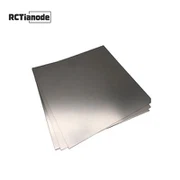
Why Titanium Anodes for NaOCl Generators?
Aug 08, 2026
When it comes to on‑site sodium hypochlorite production, the performance of the entire system hinges on one critical component – the anode. Titanium anodes have become the industry standard for NaOCl generators, replacing graphite and lead‑based electrodes in modern electrolytic cells. But what makes titanium the material of choice, and why should operators pay close attention to anode quality? This article explores the technical advantages, manufacturing processes, and key considerations when selecting titanium anodes for sodium hypochlorite generation.
What Problems Do Titanium Anodes Solve in Electrolysis?
Traditional electrodes, such as graphite or magnetite, suffer from gradual dissolution, high overpotential, and short service life. These issues lead to increased energy consumption, frequent maintenance, and inconsistent product quality. Titanium anodes with mixed metal oxide (MMO) coatings address these challenges by offering:
Dimensionally stable geometry – they do not deform or erode during operation, maintaining a consistent electrode gap and stable cell voltage.
Low chlorine overpotential – reducing the required cell voltage by 0.5–1.0V compared to graphite, which translates to significant energy savings over the equipment's lifetime.
Excellent corrosion resistance – the titanium substrate forms a passive oxide layer that protects against chloride attack, even in aggressive brine environments.
For operators of NaOCl generators, these advantages directly translate into lower operating costs, less downtime, and a more reliable disinfection process.
How Are Titanium Anodes Manufactured for NaOCl Generators?
The production of high‑performance titanium anodes involves a precise, multi‑step process. It begins with selecting premium‑grade titanium substrate (typically Grade 1 or Grade 2 commercially pure titanium), which is then cut, shaped, and welded into the desired electrode configuration – whether plate, mesh, tube, or rod.
The critical step is the application of the catalytic coating. A mixed metal oxide (MMO) layer – typically containing ruthenium, iridium, or platinum group metals – is applied using thermal decomposition or electrodeposition techniques. This coating is then sintered at high temperatures to form a stable, porous structure that maximizes active surface area and catalytic activity.
Quality control at each stage ensures that every batch of titanium anodes meets strict electrochemical performance criteria, including accelerated life testing, coating adhesion, and overpotential measurements.
Where Are Titanium Anodes Used in NaOCl Systems?
The application of titanium anodes in sodium hypochlorite generators spans multiple industries:
Municipal water treatment – for disinfection of drinking water and wastewater effluent.
Ballast water management – to comply with IMO regulations for treating ship ballast water.
Cooling tower systems – to control biological growth and biofilm formation.
Food and beverage processing – for equipment sanitization and surface cleaning.
Swimming pools and spas – to maintain residual chlorine levels without the need for storing hazardous chlorine gas.
In each of these environments, titanium anodes provide consistent chlorine output, minimal maintenance, and safe operation – essential factors for facilities that require uninterrupted disinfection.
What Should You Consider When Choosing Titanium Anodes?
Procurement teams and plant engineers often ask: How do we select the right anode for our specific NaOCl generator? Here are the key criteria:
Coating Composition – Ruthenium‑based coatings are cost‑effective for standard brine electrolysis, while iridium‑based coatings offer better performance in low‑temperature or high‑purity applications.
Current Density Range – Choose an anode rated for your operating current density (typically 500–3000 A/m² for NaOCl generators) to ensure optimal efficiency and longevity.
Substrate Thickness – Thicker titanium substrates provide longer service life but increase initial cost. A balance must be struck based on expected replacement cycles.
Coating Thickness & Uniformity – Consistent coating application ensures even current distribution and prevents localized degradation.
At Baoji Ruicheng Titanium Metal Co., Ltd. , we work closely with clients to recommend the optimal titanium anode specification based on their specific brine quality, operating temperature, and desired chlorine production rate.
How Does After‑Sales Support Extend Anode Life?
Even the best titanium anodes require periodic maintenance to maximize their operational life. We provide comprehensive lifecycle support, including:
Commissioning assistance – ensuring correct installation, electrical connections, and initial start‑up procedures.
Preventative maintenance schedules – regular inspection of coating integrity, voltage monitoring, and cleaning protocols to prevent scaling or fouling.
Re‑coating services – when the catalytic coating eventually depletes, we can strip the old coating and re‑apply a fresh MMO layer, restoring the anode to near‑original performance at a fraction of the cost of a new electrode.
Technical troubleshooting – remote or on‑site support to diagnose performance issues and recommend corrective actions.
These services help our customers achieve up to 8–10 years of reliable service from a single titanium substrate, significantly reducing total cost of ownership.
Conclusion: The Clear Choice for NaOCl Generation
For any facility relying on on‑site sodium hypochlorite production, investing in high‑quality titanium anodes is not an expense – it's a long‑term strategy for operational efficiency, product consistency, and environmental responsibility. The combination of dimensional stability, catalytic efficiency, and corrosion resistance makes titanium the undisputed material of choice for modern electrolytic disinfection systems.
If you have specific questions about selecting or replacing anodes for your NaOCl generator, our engineering team is ready to provide tailored advice and detailed quotations.
Baoji Ruicheng Titanium Metal Co., Ltd.
📍 Baoji, Shaanxi, China – The World's Titanium Valley
📞 +8618992724022
📧 sales5@bjrcti.com