Blackbird Reconnaissance Aircraft
Apr 22, 2024
Products Description
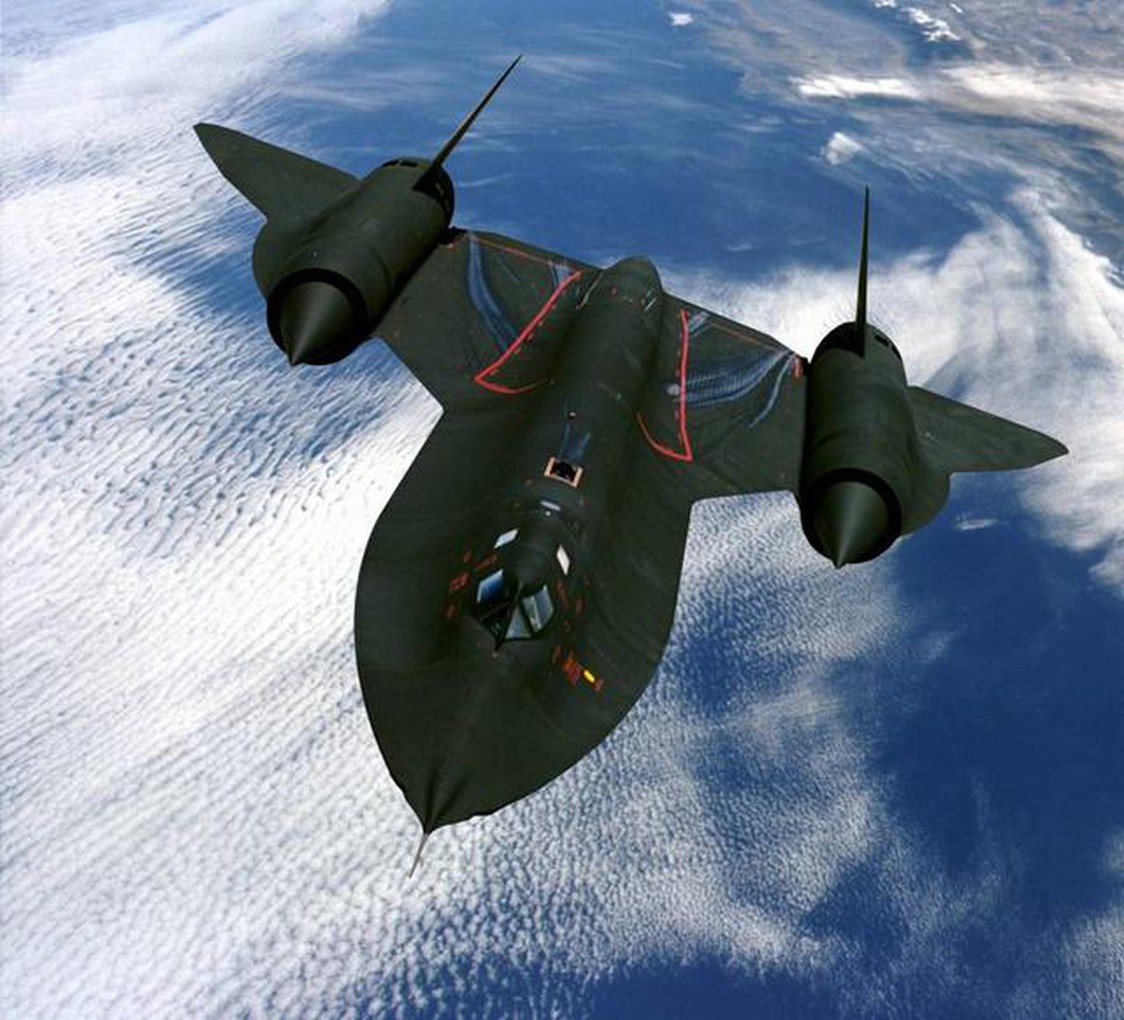
The "Blackbird" is positioned as a high-altitude, high-speed reconnaissance aircraft with a total length of 33 meters, a wingspan of 17 meters, a height of 5.7 meters, an empty weight of 33.5 tons, a maximum take-off weight of 63.5 tons, and an additional emergency load capacity of about 8 tons. The maximum design speed of the "Blackbird" is Mach 3.2, and the maximum ceiling is 30,000 meters. In actual flight, the "Blackbird" has repeatedly exceeded the limits of the design speed and ceiling. An aerial oil receiving device is installed on the back of the aircraft, and the maximum range of the internal oil reaches 4830 kilometers.
The secret to the "Blackbird" being able to fly "double three" (that is, a speed of Mach 3 and a ceiling of 30,000 meters) lies in its two J-58-1 engines, which are the world's first aerospace engines to adopt a variable cycle configuration. The J-58-1 has three ducts in total. During low-speed flight, the airflow in the outer duct and the middle duct are ejected directly without flowing through the combustion chamber, ensuring thrust while reducing fuel consumption; in high-speed flight, the front end of the engine is in front of the air inlet cone. The movement closes the outer duct, and the airflow in the middle duct mixes with the inner duct and burns together. At this time, the maximum thrust is 14.5 tons.
Since computer technology was not very mature in the era when the "Blackbird" was born, engine operating condition adjustment could only rely on the pilot's experience. Every time the speed needed to be changed, the pilot had to hurriedly manipulate the throttle lever and pressurize the aircraft at dozens of kilograms. It is never easy to surrender under pressure. Therefore, "Blackbird" pilots like to weigh themselves after completing their missions to see how much weight they have lost.
We all know that a common characteristic in physics is "thermal expansion and contraction". The surface temperature of the "Blackbird" aircraft flying at high speed for a long time will be as high as several hundred degrees, so this phenomenon is extremely prominent. When the "Blackbird" flies at Mach 3, the fuselage will be extended by more than 30 centimeters under the influence of high temperature! Since precision equipment such as pipelines cannot withstand large deformations, in order to cope with such high thermal strains, designers can only start with a fuel tank with a relatively simple structure and deliberately increase the gap at the tank connection. It will only be closed under high-temperature expansion, resulting in Under normal conditions, the "Blackbird" parked on the ground will inevitably leak fuel.
In view of the embarrassing characteristics of the "Blackbird", the service personnel will only add a small amount of fuel to meet the take-off of the "Blackbird", and rely on aerial refueling to complete the flight mission after it takes off.

Traditional aviation aluminum alloys simply cannot withstand temperatures of several hundred degrees. The rival MiG-25 also faces this problem. The solution given by the Soviets is very simple, that is, to use stainless steel for the entire fuselage skin! However, this also resulted in the heavy structural weight of the MiG-25, which affected the carrying of fuel and weapons.
The Americans have perfectly solved this problem by using the newly emerging titanium alloy. Titanium's strength, stiffness, and melting point are close to those of steel, but its density is only a little more than half that of steel. Its physical properties are very excellent. The high smelting costs of titanium alloys are not a problem at all for the wealthy United States. However, the reserves of titanium in the United States are quite scarce, and they have no choice but to import them from the Soviet Union in a covert manner. I don't know what the Soviets will think when they learn that the exported titanium alloys are used to build their own aviation rivals.
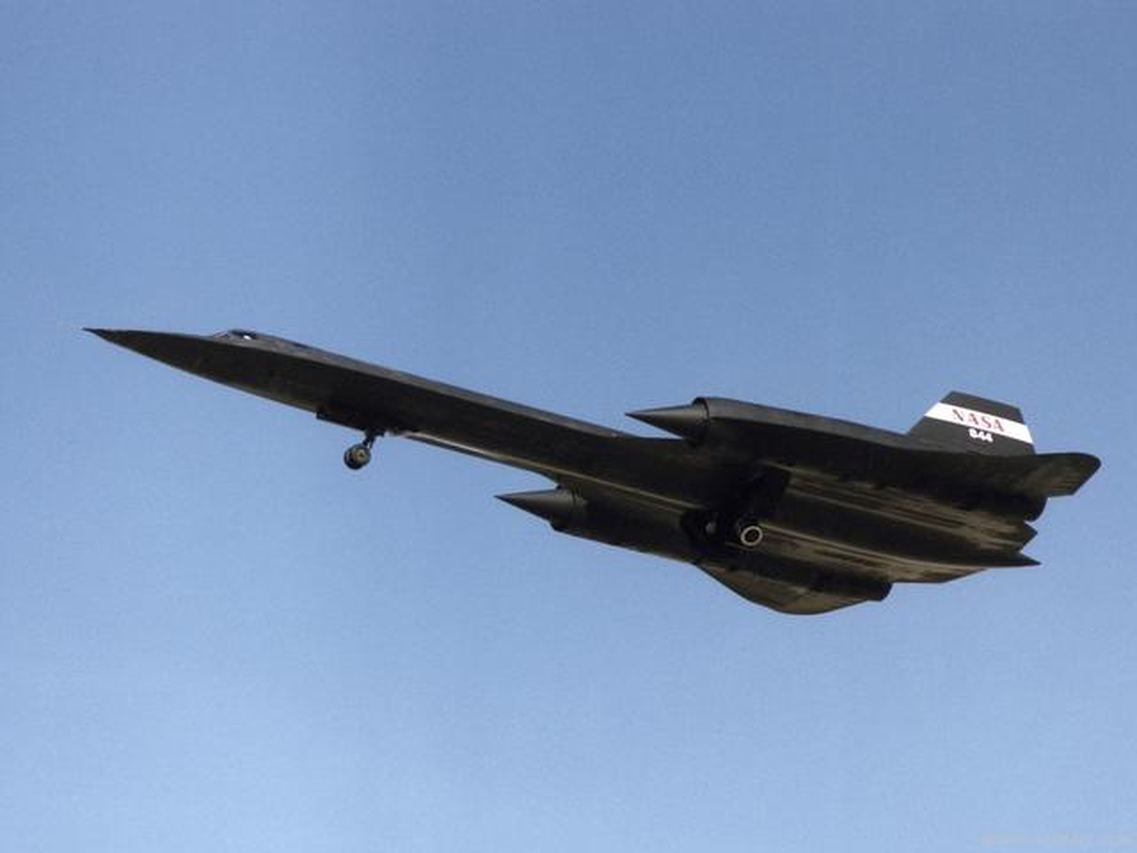
In 1976, the "Blackbird" set a flight speed of 3,529.56 kilometers per hour at an altitude of 26,000 meters. It is still the fastest flight record for a manned aircraft to this day. In 1972, the "Blackbird" was ordered to reconnoiter Israeli nuclear facilities. Although the "Blackbird" has made many measures to reduce the radar reflection area, the high temperatures generated in high-speed environments cannot escape advanced infrared reconnaissance equipment.
After discovering the traces of the "Blackbird", Israel immediately dispatched F-4 "Phantom" fighter jets and launched "Sidewinder" air-to-air missiles to intercept it. However, the Israeli Air Force pilots sadly discovered that the speed of the "Sidewinder" could not catch up with the "Blackbird". In more than 30 years of flight, the "Blackbird" has penetrated into the airspace of other countries many times but has never been shot down, becoming a legend of high-altitude and high-speed aircraft.
In 1990, the "Blackbird", which was entering its twilight years, could no longer spread its wings and fly into the sky, and began to gradually retire from active service. In 1998, the last "Blackbird" completed its flight display and was sent to the American Aviation Museum. The legendary "Double Three" "Blackbird" has come to an end in the skies around the world.