NASA Launches High-speed Composite Aircraft Manufacturing Project
Jul 29, 2022
NASA launches high-speed composite aircraft manufacturing project
According to an article posted on the NASA website, in order to find a way to quickly develop a new type of sustainable aircraft, NASA plans to carry out a high-speed composite aircraft manufacturing (HiCAM) project. The HiCAM project is part of the Sustainable Flight National Partnership (SFNP). NASA will work with its partners in industry, academia, and government to adopt green technologies to promote the development of more sustainable aviation.
The HiCAM project manager of NASA Langley Research Center said that as one of NASA's latest projects, the HiCAM project plans to widely apply composite materials to the next generation of aircraft, which requires the creation of economical and fast aircraft production facilities.
In the next 20 years, the global commercial aviation fleet will need about 40,000 new aircraft to meet the growing demand for air travel, while replacing older airliners with older aircraft, most of which will be used for single-channel aircraft market operations.
At present, the productivity of single-aisle airliners made of metal structures like Boeing 737 airliners is about 60 per month. Compared with the productivity of metal aircraft, the productivity of airliners made of composite materials like Airbus A220 airliners or larger Boeing 787 airliners does not exceed 14 per month.
The goal of the HiCAM project is to accelerate this production process to achieve a productivity of 80 aircraft per month using composite materials. In order to achieve this goal, researchers are studying which composite materials and manufacturing methods can be accelerated to such a high productivity, and more large aircraft components, such as aircraft racks and airframes, can be manufactured faster. These components can be made of customized mixed materials such as plastic, graphite and ceramics, which can significantly reduce the cost of composite structures, significantly reduce the weight of the aircraft, and achieve fuel-saving goals.
NASA said that productivity is limited by the time it takes to manufacture parts, assemble parts to make large aircraft parts, and check quality results. At present, most aircraft parts made of composite materials are thermosetting materials, and their manufacturing process is irreversible. The composite material made of each part is cured by the high temperature and high pressure of the hot pressing tank and finally becomes solid.
The whole process is relatively long, up to 8 hours. In order to shorten the time, it is necessary to study which composite materials cure the fastest in the hot pressing tank, which materials can be cured without the use of the hot pressing tank, and whether there are other composite materials that can be used in manufacturing.
The HiCAM project team is still working with industry partners of the Advanced Composite Materials Alliance to develop high-speed composite material manufacturing processes. These industry partners include aircraft manufacturers, equipment and software developers, and material suppliers. Although the focus of the HiCAM project is on transport aircraft, it also has high application potential in other aspects, including small aircraft structures for advanced air transport.
Toray Composite Materials America Inc (TCMA) is a manufacturer of TORAYCA ™ carbon fiber and aviation-grade thermosetting prepreg. It participated in the three-part task of the project at this stage, mainly responsible for the supply of TORAYCA ™ carbon fiber and the next generation of thermosetting prepreg.
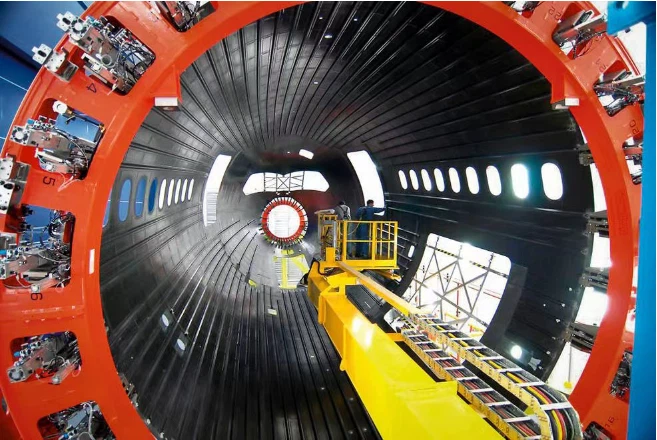
In addition, TCMA also provides process guidance for the use of materials in the development of automated fiber placement (AFP) process, rapid curing, and resin perfusion of wing/fuselage structures. Thermosetting prepreg uses medium modulus carbon fiber (IM+) and toughened epoxy resin system to provide structural properties, low resin content and strict physical properties manufacturing tolerances.
Jeff Cross, director of aerospace business development at TCMA, said: “We are proud to participate in ACC's efforts to reduce costs, improve performance, and increase the delivery rate of single-channel commercial aircraft, so as to maintain the competitive advantage of the United States in aircraft manufacturing.” .
Toray Advanced Composites (TAC) is a manufacturer of a variety of thermosetting and thermoplastic composite materials technologies. It directly participated in the four additional parts of the project and provided a series of Cetex ® thermoplastic UD tapes and other material inputs.
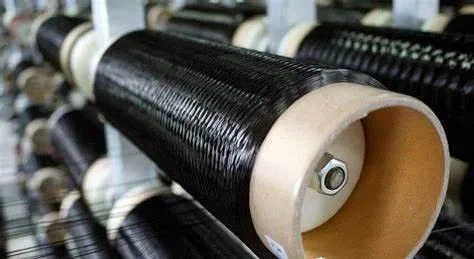
These materials include TORAYCA ® carbon fiber reinforced state-of-the-art structural thermoplastic composites with standard and intermediate modulus, and are used in innovative PARTS manufacturing and ASSEMBLY PROCESSES. Steve Stop, vice president of technology at TAC, said: “Toray is honored to support this overall material and process technology plan to help the aerospace manufacturing industry achieve unprecedented 4-6 times productivity growth. ”