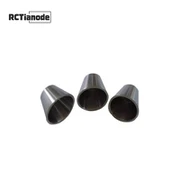
Iridium Tantalum Titanium Electrode Price Factor: Cost And Performance Tradeoffs
Feb 18, 2024
Introduction:
Baoji Ruicheng Titanium Metal Co., Ltd., located in the High-tech Development Zone of Baoji Shaanxi, China, is a renowned high-tech enterprise in the "Chinese titanium city." With advanced technology, exceptional product quality, and excellent service, Ruicheng has become a prominent player in the field of non-ferrous metal research and manufacturing. The company focuses on the deep processing of industrial and civil titanium, as well as other rare metals, establishing a comprehensive production process.
Focus on Titanium Anode and Titanium Electrode:
Baoji Ruicheng Titanium Metal Co., Ltd. specializes in the processing and sales of various types of titanium anodes and titanium electrodes. These include ruthenium-series, iridium-series, platinum-series, and others. The company is dedicated to offering high-quality products that meet the specific needs of various industries.
Wide Range of Non-Ferrous Metal Products:
Ruicheng holds a strong market position in the processing and sales of titanium plates, titanium bars, titanium pipes, titanium standard parts, titanium composite materials, and other non-ferrous metal products. These products find diverse applications across chemical, metallurgical, petroleum, textile, medical, light industry, environmental, sports, mining, oceanic, and many other industries.
Iridium Tantalum Titanium Electrode Price Factor: Cost and Performance Tradeoffs:
Iridium tantalum titanium electrodes offer outstanding performance in various applications, but their price is influenced by several factors. To strike the right balance between cost and performance, it is crucial to consider the following tradeoffs:
1. Material Composition:
The proportion of iridium, tantalum, and titanium in the electrode greatly impacts its price. Higher percentages of iridium and tantalum increase the cost due to the rarity and difficulty of sourcing these metals. However, their inclusion enhances the electrode's performance and durability, making it suitable for demanding applications. Each of these metals has different market values and characteristics, and their presence in the electrode composition affects the material cost and manufacturing complexity.
Iridium is an uncommon and valuable metal, known for its high erosion opposition and conductivity. It is perhaps of the most costly metal, and its shortage adds to its high market cost. Consequently, a higher iridium content in the electrode piece will considerably expand the general expense of the electrode.
Tantalum is also a valuable and relatively rare metal with excellent corrosion resistance. It is used in various high-performance applications, and its scarcity contributes to its high cost. The proportion of tantalum in the electrode will impact the material cost and, consequently, the price of the electrode.
Titanium, while more plentiful than iridium and tantalum, is as yet significant because of its great solidarity to-weight proportion, erosion obstruction, and biocompatibility. How much titanium in the electrode structure will influence the material expense, yet commonly less significantly contrasted with iridium and tantalum.
The particular blend and extent of these metals in the electrode will decide its general exhibition attributes, like consumption opposition, conductivity, and mechanical properties, yet it will likewise essentially affect the expense of the electrode. Higher extents of iridium and tantalum by and large lead to higher material expenses and, subsequently, a more exorbitant cost for the electrode.
2. Manufacturing Process:
Absolutely, the complexity of the manufacturing process plays a significant role in determining the price of iridium tantalum titanium electrodes. Advanced manufacturing techniques such as powder metallurgy, hot pressing, and sintering are often employed to produce high-quality electrodes with superior performance characteristics. While these advanced processes can add to the overall cost of production, they contribute to the electrodes' exceptional performance and extended lifespan, thus justifying their higher price.
Powder metallurgy involves the production of metal powders that are then compacted and sintered to form the final electrode shape. This process allows for precise control over the composition and microstructure of the electrode, resulting in improved performance and corrosion resistance. However, the advanced nature of this technique can increase production costs.
Hot pressing is another advanced manufacturing method that involves applying heat and pressure to compact the metal powders into a solid shape. This process can help eliminate porosity and ensure uniformity in the material, leading to enhanced mechanical and electrochemical properties. The additional steps and equipment required for hot pressing can contribute to higher production costs.
Sintering, a process of compacting and forming materials using heat and pressure, is often employed to densify the metal powders and achieve the desired electrode structure. This process can enhance the strength, durability, and corrosion resistance of the electrode but may require specialized equipment and meticulous control of the sintering parameters, adding to the manufacturing complexity and cost.
Although these advanced manufacturing processes contribute to the higher price of iridium tantalum titanium electrodes, they are essential for achieving the superior performance, exceptional corrosion resistance, and longer lifespan that are characteristic of these electrodes. As a result, the cost reflects the investment in advanced manufacturing techniques that ultimately deliver the high-quality, high-performance electrodes sought after in various industries and applications.
3. Application Requirements:
The specific requirements of the application play a crucial role in determining the price of iridium tantalum titanium electrodes. Various factors related to the application's operating conditions, performance needs, and desired electrode lifespan can influence the cost. Additionally, customization requirements such as electrode size, shape, and surface treatment can also impact the final price.
Operating Conditions: The harshness of the operating environment, including factors such as temperature, chemical exposure, and mechanical stresses, can influence the design and material specifications of the electrode. Electrodes designed to withstand extreme conditions or corrosive environments may require specialized materials and manufacturing processes, resulting in a higher price.
Desired Performance: The performance characteristics required for a specific application, such as high electrical conductivity, exceptional corrosion resistance, or precise electrochemical properties, can influence the materials and manufacturing methods used to produce the electrodes. Meeting stringent performance requirements often involves additional costs associated with material selection and process optimization.
Lifespan Requirements: The expected lifespan of the electrode in a given application can impact its price. Electrodes designed for long-term use, particularly in critical applications such as medical devices or industrial processes, may require higher quality materials and manufacturing processes to ensure durability and reliability, contributing to a higher cost.
Customization: Tailoring the electrode to specific size, shape, or surface treatment requirements can also influence the price. Customized manufacturing processes and additional finishing treatments may be necessary to meet the unique specifications of the application, adding to the overall cost of the electrode.
In conclusion, the price of iridium tantalum titanium electrodes is influenced by the specific requirements of the application, including operating conditions, performance needs, expected lifespan, and customization demands. Meeting these specific application requirements often involves specialized materials, manufacturing processes, and customization, which can contribute to the overall cost of the electrode.
By carefully considering these tradeoffs, customers can make informed decisions based on their budget and performance expectations.
Contact Us:
If you are interested in our products or have any inquiries, please feel free to contact us at mailto:sales2@bjrcti.com.
References:
Kavian R, Montebello A, Beck C. Electrochemical wastewater treatment using dimensionally stable anodes. Applied Catalysis B: Environmental. 2019;241:180-187.
Swei M, Chen W, Greenspan P, Germino G. Electrochemical characteristics of dimensionally stable valve metals in sulfuric acid. Corrosion Engineering, Science and Technology. 2009;44(3):183-189.
Bommet PL, Crincoli LJ, Haas PA. Electrochemical oxidation of gaseous chlorine and hypochlorite production. Environmental Progress & Sustainable Energy. 1991;10(2):121-126.