The application of titanium in the chemical industry - chlor alkali
May 11, 2023
Metal anode
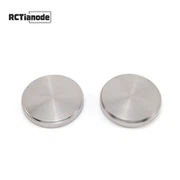
The production processes of chlor alkali include mercury electrolysis, membrane electrolysis, and ion membrane electrolysis. In the past, graphite anodes were always used as chlor alkali anodes. In 1956, Dutch man H. Beer first proposed the use of metal anodes, also known as Dimensionally Stable Anodes (DSA), in electrolytic cells. He obtained a patent in 1965, and the size stable anode is an electrode coated with platinum group precious metal oxides on a titanium substrate. In 1968, DeNore Company in Italy first achieved the industrialization of titanium anodes in the chlor alkali industry. Around 1970, countries such as the United States, Italy, Japan, Germany, and France quickly switched to using metal anodes instead of graphite anodes. In Japan, there are already thousands of tons of titanium materials used as the substrate material for metal anodes, and the production of 10000 tons of caustic soda requires about 5 tons of titanium materials.
The development of China's chlor alkali industry has undergone three major changes in the main equipment (electrolytic cell) for caustic soda production. The first transformation was to replace horizontal tanks with vertical tanks. In the early 1960s, the traditional horizontal tanks were replaced with vertical adsorption membrane electrolysis tanks, which greatly increased China's caustic soda production from 193000 tons in 1957 to 693000 tons in 1966, an increase of 3.6 times.
The second transformation was the replacement of graphite anode electrolysis cells with metal anode electrolysis cells. In the 1970s, metal anodes (DSA) were used to replace graphite anodes. China began conducting titanium anode experiments at Shanghai Tianyuan Chemical Plant and Tianjin Chemical Plant in 1972, and began testing 20m in 1973? Metal anode diaphragm electrolytic cell test, gradually using 30m since 1974? Metal anode electrolytic cell. In 1978, the country carried out a metal anode technology transformation task for 400000 tons of diaphragm caustic soda. As of 1981, there were 17 chlor alkali plants in China using a total of 1217 metal anode electrolysis cells, forming a capacity of 670000 tons of caustic soda annually produced by the diaphragm method metal anode, accounting for 30% of the national caustic soda production capacity. Additionally, a total of 95000 tons of mercury electrolysis capacity were achieved using DSA. As of 1996, there were a total of 99 chlor alkali plants in China with a total of 8409 metal anode diaphragm electrolytic cells, with an annual production capacity of 4.2 million tons of caustic soda, accounting for 70% of the national caustic soda production capacity. Except for a few large chemical factories such as Tianyuan, Tianhua, and Daguhua, most of the metal anode electrolysis tanks are manufactured and supplied by professional factories such as Beijing Chemical Machinery Factory and Shanghai 4805 Factory.
The third transformation was the use of ion exchange membrane electrolyzers. In the mid-1980s, energy-saving and efficient ion exchange membrane methods were promoted for the production of caustic soda. China introduced ion exchange membrane caustic soda technology and equipment from Japan and other countries, forming a series of 10000 to 50000 ton units. The main equipment includes ion exchange membrane electrolyzers, titanium anode liquid circulation tanks, dilute salt water tanks, vacuum dechlorination towers, heat exchangers, pipes, and pump valves, Titanium equipment and tubes are mainly used in anode liquid circulation systems, dilute brine systems, dechlorination systems, wet chlorine gas transportation systems, and chlorine water circulation systems. Titanium pumps are mainly used to transport refined brine, anode circulating liquid, dilute brine, and chlorine water. A set of 10000 ton equipment requires approximately 8 tons of titanium. In June 1986, the Yanguoxia Chemical Plant first introduced Japanese Asahi technology and produced an annual output of 10000 tons of caustic soda equipment. Except for the three-dimensional electrolysis tank and anode liquid titanium pump supplied by Japan, the other six titanium equipment were all domestically matched and supplied by Jinxi Chemical Machinery Factory. By 1990, 11 chlor alkali plants had adopted ion membrane caustic soda units with a production capacity of 295000 tons. In 1995, a total of 27 chlor alkali plants in China had adopted ion membrane caustic soda units with a production capacity of 827000 tons. The annual production capacity of caustic soda in China's chlor alkali industry was 7.5 million tons in 2000, 14.71 million tons in 2005, and 23.99 million tons in 2010.
In an ion exchange membrane electrolysis cell, the temperature of the cathode and anode chambers is around 90 ℃. The anode chamber contains chlorine gas and salt solution, while the cathode chamber contains caustic soda solution with a concentration of 30%~35%. The ion exchange membrane electrolysis cell generally operates with a current density of 30-40A/dm?. Under such harsh operating conditions, it is necessary to fully consider the material usage and anti-corrosion structure of the electrolytic cell when designing it. The anode part (referring to the anode and the part in contact with the anode solution) of ion exchange membrane electrolyzers has been selected by countries around the world without exception, as titanium metal (or corrosion-resistant titanium alloy) with good corrosion resistance in the anode solution.
The schematic diagram of ion exchange membrane for caustic soda is shown in Figure 2-4. The two electrodes are isolated using ion exchange membranes, with salt water added from one side and pure water added from the other side. After passing the current, chlorine gas is generated from the anode side and hydrogen gas is generated from the cathode side. Ionic membranes only allow sodium ions to pass through, so sodium hydroxide is generated from the cathode side.
In addition to the main equipment of the ion exchange membrane caustic soda device, the titanium equipment is mainly used in the following areas: brine system - liquid level gauge; Anode liquid system - anode liquid tank and chlorine washing tower; Fresh water system - dechlorination tower, fresh water distributor, instrument cooler; Sodium hypochlorite system - cooling, absorption tower, distributor; Chlorine system - wet chlorine cooler; Pest removal system - heat exchanger, pest removal fan.